
From Inputs to Harvest: Why Agricultural Transport Planning Starts Before Planting
The agricultural season does not suddenly become busy on planting day.
Long before the first summer crops are planted, fertiliser, seed, equipment and other inputs need to reach farms. Machinery begins moving between operations. Livestock transport continues alongside crop production. And once the season gathers momentum, delays become increasingly expensive.
For farmers, suppliers and transport operators, late winter and early spring are therefore an important planning period.
Good agricultural transport is not simply about having a truck available. It is about making sure the right equipment, routes and schedules are ready when they are needed.
Spring marks the beginning of a busier cycle
Across South Africa’s summer rainfall regions, preparations for maize, soybean, sunflower and other summer crops begin well before planting starts in October and November.
As activity increases, so does movement.
Seed and fertiliser need to reach farms. Agricultural equipment and materials must be positioned. Livestock may need to move between farms, grazing or sale facilities. Later in the cycle, grain and other commodities must move from farms to storage, processors and markets.
Each stage places different demands on the transport network.
Waiting until those movements become urgent leaves very little room for disruption.
Inputs need to arrive before they are needed
Planting windows are often dictated by conditions rather than calendars.
When adequate rain arrives and soil conditions are right, farmers may need to move quickly. A late fertiliser or seed delivery can therefore affect far more than a transport schedule.
Pre-season planning allows producers and suppliers to confirm delivery requirements, approximate volumes and destination access ahead of time.
It also gives transport operators a better opportunity to match the load with suitable equipment.
Tautliners, for example, offer protected and flexible transport for many palletised or packaged agricultural goods, while other loads require completely different trailer configurations.
Using the correct equipment improves efficiency and reduces unnecessary handling.
Agricultural transport requires flexibility
Farm logistics are rarely as predictable as moving freight between two warehouses.
Loading points may be on gravel roads. Conditions can change after rain. Harvesting or planting may continue outside normal business hours. Loading times can shift because of weather, machinery or field conditions.
A transport plan therefore needs enough structure to keep goods moving efficiently while retaining enough flexibility to respond when conditions change.
Clear communication between the farmer, supplier and transport company becomes especially important during these periods.
Knowing what is being transported, where it must go, when it needs to arrive and what conditions exist at the loading or offloading point can prevent avoidable delays.
Livestock transport has its own requirements
Agricultural logistics are not limited to crops.
Cattle transport continues throughout the year and requires a completely different approach from general freight or bulk commodities.
Purpose-built aluminium cattle trailers provide ventilation and appropriate loading space while allowing animals to be transported in equipment designed specifically for livestock.
Planning remains important here too.
Loading arrangements, travel time, road conditions and destination requirements should be considered before the vehicle arrives. Calm, organised loading helps reduce unnecessary stress on animals and makes the overall movement safer and more efficient.
Bulk transport becomes critical later in the cycle
Once crops are harvested, the logistics requirements change again.
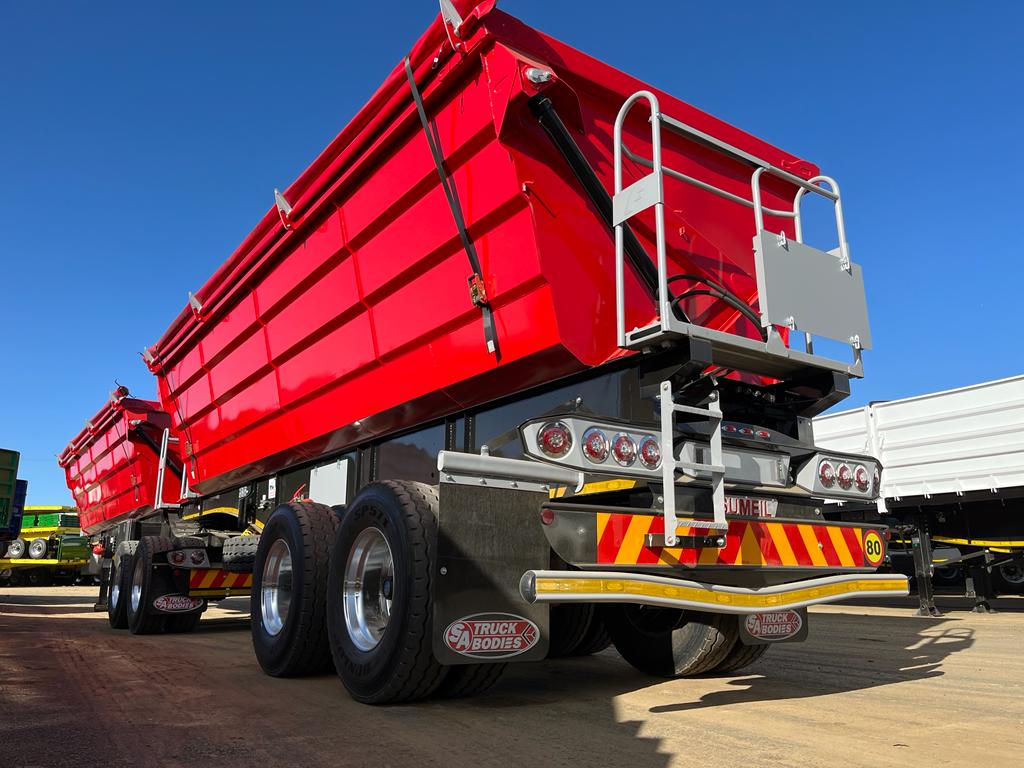
Side tipper combinations are particularly important for moving bulk agricultural commodities efficiently between farms, silos and other destinations.
South Africa relies heavily on road transport for the movement of grain and oilseeds. During busy periods this places significant pressure on vehicles, drivers, loading facilities and transport schedules.
Transport capacity that seems readily available during quieter months can become much harder to secure when an entire region is harvesting at the same time.
That is why good harvest logistics often begin with relationships and planning established months earlier.
Vehicle readiness matters as much as scheduling
Planning a delivery means little if equipment is unreliable.
Agricultural transport can involve long distances, demanding road conditions and tight turnaround times. Trucks and trailers therefore need to enter busy periods properly maintained.
Tyres, braking systems, hydraulics, suspension, trailer structures, lights and other safety-critical components all require regular attention.
Preventative maintenance will not eliminate every breakdown, but it reduces the likelihood of avoidable downtime when demand is at its highest.
The quieter period before the agricultural season gathers pace is the right time to identify and address these issues.
Planning creates room for the unexpected
Agriculture will always involve variables that cannot be scheduled precisely.
Rain can move planting dates. Harvest progress can change from one field to another. Roads can deteriorate. Loading can take longer than expected.
Good logistics planning does not remove these uncertainties.
It creates enough structure around them that changes can be managed without disrupting the entire operation.
The earlier transport requirements are discussed, the easier it becomes to allocate suitable vehicles, coordinate loads and adjust schedules when conditions change.
Agricultural logistics is part of the production chain
Transport may happen away from the field, but it remains an important part of agricultural production.
Inputs need to arrive before planting. Livestock needs to move safely. Crops need to reach storage and markets after harvest.
Every movement connects one part of the agricultural chain to the next.
As South Africa moves from late winter into spring and preparations for the next summer crop season begin, now is a good time for farmers and agricultural businesses to start thinking about their transport requirements.
Planning early does not mean everything will happen exactly as expected.
It simply means you are better prepared when the season starts moving.
Keep Reading
Compare side tipper and flat deck transport for grain, fertiliser, and bulk agricultural loads in South Africa. Learn which option is safer, faster, and more cost-effective.
Understand the legal load limits for agricultural transport in South Africa. Learn how staying compliant protects your harvest, avoids fines, and ensures smooth logistics.
Discover how smallholder farmers can increase profits, reduce waste, and access larger markets with professional agricultural transport services.
