
Transporting Cattle in Summer: Why Heat Management Matters
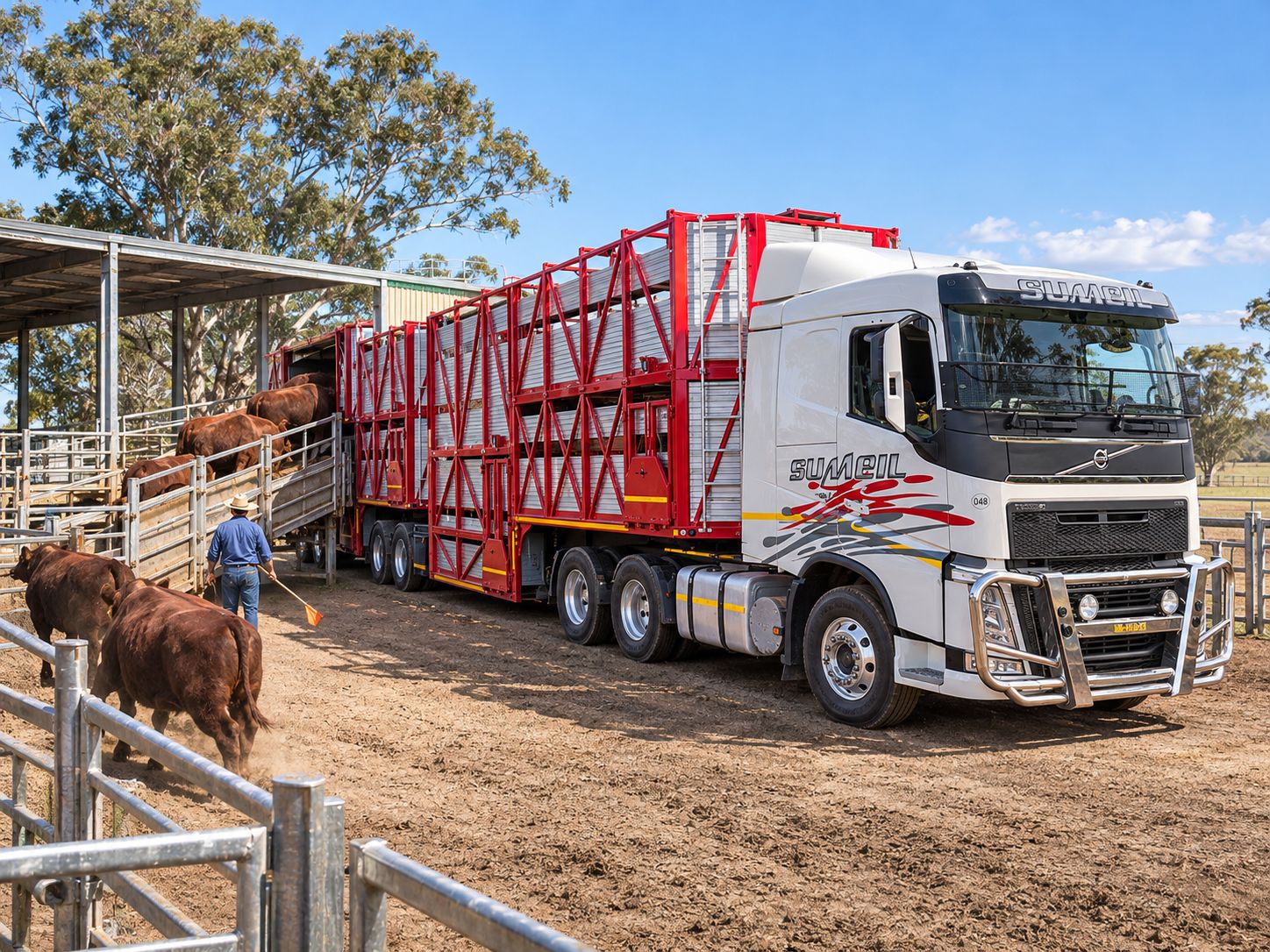
As temperatures rise across South Africa during the summer months, livestock farmers and transport operators face an additional challenge: moving cattle safely in hot weather.
While transporting livestock is a routine part of agricultural operations, summer conditions require extra consideration. High temperatures, long distances, loading delays and inadequate ventilation can all place unnecessary stress on animals during transport.
For farmers, livestock buyers and transport companies, understanding these risks is an important part of protecting animal welfare and ensuring that cattle arrive at their destination in good condition.
How Heat Affects Cattle During Transport
Cattle naturally produce body heat, and their ability to regulate temperature depends on several factors, including air movement, humidity and the surrounding environment.
During transport, these conditions can become more difficult to manage.
Animals are confined within a trailer, often travelling considerable distances between farms, auctions, feedlots and other agricultural facilities.
When outside temperatures increase, heat can build up inside the trailer, particularly when airflow is restricted or the vehicle remains stationary.
Cattle experiencing heat stress may show signs such as increased breathing rates, excessive panting, restlessness and fatigue.
If conditions become severe, heat stress can result in dehydration, exhaustion and serious health complications.
Preventing these problems begins long before the vehicle leaves the farm.
Planning Livestock Transport Around the Weather
One of the simplest ways to reduce heat-related risks is to consider the expected weather conditions when scheduling livestock movements.
During particularly hot periods, transporting cattle in the cooler hours of the morning or evening can help reduce their exposure to extreme temperatures.
However, temperature is not the only consideration.
Humidity, journey duration, road conditions and the time required for loading and unloading can all influence how cattle experience a journey.
A well-planned livestock movement should consider:
- Expected temperatures along the route.
- Travel distance and likely journey duration.
- Suitable loading and unloading times.
- Potential delays at collection and delivery points.
- The condition and suitability of the animals being transported.
Where possible, avoiding unnecessary waiting periods can make a meaningful difference to the comfort and welfare of livestock.
Why Trailer Ventilation Is So Important
A livestock trailer must do more than securely contain animals during transport.
It should also provide suitable airflow to help regulate temperature and prevent excessive heat and moisture from building up.
Without adequate ventilation, the conditions inside a loaded trailer can become uncomfortable, even when the outside temperature appears manageable.
This is particularly important when vehicles are stationary, as natural airflow through the trailer may be reduced.
Purpose-built livestock trailers are designed with animal transport requirements in mind, including ventilation, secure compartments and suitable loading arrangements.
At Sumeil, our aluminium cattle trailers form part of our specialised agricultural transport fleet, allowing us to accommodate livestock movements alongside our other agricultural logistics services.
Using equipment suited to the type of load is an important foundation for safe and reliable transport.
Loading Practices Can Make a Difference
Loading cattle is one of the most important stages of a livestock transport operation.
Animals may already be experiencing stress from handling, separation or unfamiliar surroundings before they enter the trailer.
Rushing the loading process or handling animals unnecessarily can increase this stress.
Calm, organised handling helps create better conditions for both the livestock and the people involved.
The number and size of animals being transported must also be considered carefully.
Overcrowding can restrict movement, reduce airflow and increase the amount of heat generated inside the trailer.
Appropriate loading arrangements should account for animal size, weight, condition and prevailing weather conditions rather than focusing only on the maximum carrying capacity of the vehicle.
The objective is to transport livestock efficiently without compromising their welfare.
The Importance of Communication Between Farmers and Transporters
Livestock transport involves more than the driver and the truck.
Farmers, livestock handlers, transport coordinators and receiving facilities all have an important role to play.
When everyone understands the loading arrangements, expected arrival time and unloading requirements, the process becomes more predictable.
For example, having cattle ready for loading when the vehicle arrives can reduce unnecessary delays.
Likewise, ensuring that the receiving facility is prepared helps prevent animals from spending extended periods waiting in a loaded trailer.
Clear communication also makes it easier to respond when weather conditions or operational circumstances change unexpectedly.
In livestock transport, coordination is not only about improving efficiency. It directly supports better animal welfare.
Protecting Livestock Means Protecting Agricultural Value
Cattle represent a significant investment for livestock producers.
Their condition affects both animal welfare and the commercial value of the farming operation.
Poor transport conditions can contribute to unnecessary stress, injury, dehydration and weight loss. In serious cases, the consequences can extend beyond the journey itself.
Responsible transport therefore plays an important role in protecting the value farmers have built through months or years of livestock management.
This is one reason why reliable vehicles, suitable trailers, experienced drivers and careful planning remain essential to agricultural logistics.
Reliable Livestock Transport Starts With Preparation
Summer is an active period for South African agriculture, and livestock movements continue throughout the warmer months.
While hot weather cannot always be avoided, the risks associated with transporting cattle can be reduced through responsible planning, suitable equipment and good communication.
From choosing appropriate travel times to ensuring that livestock are handled carefully during loading and unloading, every decision contributes to a safer journey.
At Sumeil, we understand the importance of transporting agricultural products and livestock with care, reliability and attention to detail.
Because when it comes to livestock transport, a successful delivery is about more than reaching the destination on time. It is about ensuring that the animals arrive safely and in good condition.
Keep Reading

A practical guide to humane, efficient livestock transport in South Africa. Learn welfare standards, stocking density, loading, heat management, biosecurity and KPIs—plus how Sumeil delivers welfare-first logistics.

Discover why aluminium livestock trailers are the top choice for efficient and safe cattle transport. Learn about their durability, lightweight design, and how they enhance transportation efficiency.
Planning cattle transport in South Africa? Learn which permits, declarations and livestock movement documents may be required before moving cattle between farms, auctions and abattoirs.
