
Livestock Transport in South Africa: Safety, Welfare and Reliability the Sumeil Way

Introduction
Moving livestock safely, humanely and efficiently is the thread that ties together animal welfare, farm profitability and public trust. Whether you’re relocating breeding stock, sending weaners to backgrounding, or delivering finished animals to auction or abattoir, the quality of transport determines outcomes. Good transport protects animals from stress and injury, reduces weight loss and shrink, improves carcass quality, and safeguards biosecurity between farms. Poor transport does the opposite—raising mortality risk, triggering bruising and condemnations, and damaging reputations that took years to build.
This cornerstone guide sets out what “good” looks like in South African conditions, with an emphasis on Free State operations and long-haul routes across Southern Africa. It blends practical on-farm checklists, vehicle and equipment standards, staff training, route planning, and post-journey recovery—anchored in Sumeil’s commitment to livestock welfare and reliable, farmer-first service.
Core Principles of Humane Livestock Transport
Humane transport rests on five pillars:
- Fit-for-purpose animals: Only animals fit to travel are loaded. Compromised animals are stabilised or transported under veterinary direction.
- Calm, low-stress handling: Animals move better when they understand where to go. Good design and patient stockmanship beat force every time.
- Safe vehicles and surfaces: Non-slip floors, secure partitions, proper side height, and adequate headroom prevent falls and piling.
- Ventilation and thermal comfort: Air movement and shade matter as much as space allowance—especially in summer heat or Highveld cold fronts.
- Competent people and clear SOPs: Trained drivers and handlers, consistent checklists, and written procedures turn principles into predictable outcomes.
Regulatory and Assurance Landscape (Plain-English Overview)
South African livestock transport is guided by animal welfare legislation, broadly aligned with international good practice. In plain terms, that means:
- Animals must be protected from unnecessary suffering.
- Loading densities must allow animals to stand naturally without crushing.
- Vehicles must be suitable, safe, and maintained.
- Transporters should keep records that link animals, origin, route and destination.
- When in doubt, the cautious, welfare-first option wins.
This guide translates those expectations into practical steps you can apply today. For specific situations (e.g., transporting late-gestation cows, long-distance weaner movements, cross-border protocols), consult your veterinarian and destination requirements.
Pre-Transport Planning: Where Welfare and Efficiency Begin
Preparation reduces stress before the truck even arrives.
Checklist for producers
- Select fit animals only; separate the compromised for treatment or special arrangements.
- Rest and water access: Ensure animals are hydrated pre-loading; avoid heavy feed immediately before departure for long hauls.
- Draft early, with time to settle: Move groups quietly into holding pens at least 1–2 hours before loading.
- ID and documentation: Brand/ear tags, movement permits, veterinary attestations, and destination instructions ready in a single pack.
- Weather window: If hot and still, book early-morning or evening departures; in cold, avoid long holding in wind-exposed pens.
- Facilities: Check raceways, gates, lighting and non-slip surfaces; fix snags that catch hides or horns.
What Sumeil prepares
- Vehicle match to consignment (class, size, horned vs polled, presence of calves).
- Partition plan to maintain stable groups and prevent overcrowding.
- Route profile with fuel, rest and inspection points; alternates for roadworks or closures.
- Communication plan: Producer, transporter and receiver have one shared itinerary and contact list.

Vehicle and Equipment Standards That Matter
The truck and trailer are moving infrastructure; design details protect animals and handlers alike.
Flooring and footing
- Non-slip, well-drained, easy to clean. Rubberised or ridged flooring prevents falls; avoid gaps that trap claws.
- Fresh, dry bedding for long hauls or extreme temperatures; remove wet patches at rest stops when safe to do so.
Partitions and sidewalls
- Adjustable partitions keep groups stable and stop animals from surging during braking.
- Side height and solid lower panels reduce drafts at leg level while maintaining ventilation higher up.
Loading geometry
- Ramps with safe angles and cleats; no sudden step-ups. Covered loading if possible to reduce glare and shadows that make animals balk.
- Adequate headroom to prevent rubbing and jumping.
Ventilation and shade
- Cross-flow ventilation via louvres, perforations, or purposeful gaps high on the side; never block airflow with tarps except for rain protection that preserves air movement.
- Summer runs prioritise dawn/dusk windows; parked vehicles never left in direct sun with animals on board.
Water systems
- For extended durations, mobile watering options or scheduled lairage with troughs. Plan stops in advance; don’t improvise on the roadside.
Stocking Density: Enough Space to Stand, Balance and Breathe
Space allowance changes with species, size, horn status, fleece/hide condition, and weather. The practical test:
- All animals can stand naturally with heads up.
- No animals are forced to lie because of crowding.
- Animals can brace during turns and braking without piling.
Working rules of thumb
- Heat or long distance → reduce density modestly to improve airflow.
- Horned cattle → slightly more space to avoid goring.
- Young calves → smaller pens with protective partitions; avoid mixing with larger animals.
Document the density decision with weight class estimates and pen dimensions; repeatability builds trust.
Low-Stress Handling and Loading
Loading is the highest-risk moment for slips, bruises and stress hormones. Professional calm beats speed.
Best practice
- Flow, not force: Use animal sightlines; solid sides, gentle curves and a clear target pen.
- Tools: Flags or paddles preferred over prods. If a prod is used, it’s the exception, not the method.
- Grouping: Keep established social groups together; avoid mixing unfamiliar bulls or overly large/heavy differentials.
- Lighting: Even, no glare or strobing shadows across the ramp; animals hesitate at contrast lines.
Time spent setting animals up calmly pays back in faster loading, cleaner hides, fewer falls, and better arrival condition.
Heat, Cold and Weather Management
Thermal stress is preventable with planning.
Hot conditions
- Depart early or late to avoid peak solar load.
- Reduce stocking density, maximise airflow; avoid still, windless heat.
- Keep vehicles moving steadily; parked vehicles heat rapidly—if delayed, seek shade and create airflow.
Cold/wet conditions
- Prevent wind chill with baffles that don’t block ventilation.
- Dry bedding reduces conductive heat loss; remove saturated patches at scheduled stops.
- Avoid long holds in exposed pens; load promptly and calmly.
In-Transit Care: Driving, Monitoring and Route Management
The driver sets the tone. Defensive, anticipatory driving protects animals.
Driving standards
- Smooth throttle, gentle braking, wide turning arcs.
- Maintain steady speeds; avoid abrupt lane changes and potholes that trigger falls.
- Keep conversation open with escort/dispatcher to anticipate stops.
Monitoring
- Scheduled walk-arounds at safe, designated areas.
- Look and listen: animals upright, breathing normal, no piling, no excessive vocalisation.
- Quick interventions: adjust partitions, remove hazards, call for veterinary guidance if needed.
Route and duration
- Pre-planned rest points for long hauls; avoid ad-hoc stopping on hot tarmac or busy verges.
- Share live ETA updates with receiver; prevent queues at arrival by coordinating lairage timing.
Biosecurity: Don’t Move Disease with the Animals
Transport can spread pathogens unless you break the chain.
Controls
- Clean-out and wash-down between loads; disinfect contact surfaces.
- Dedicated equipment per species/class where feasible; label and store separately.
- Load “clean to dirty”: youngest/most vulnerable first in the day’s schedule, not after riskier consignments.
- Documentation that ties vehicle, consignment, origin and destination for traceability.
Special Classes: Calves, Cows Close to Calving, Bulls and Horned Cattle
Each class needs a tailored approach.
Calves
- Shorter legs and less resilience: lower ramp angles, tighter partitions to prevent tumbling.
- Frequent checks for lying calves; ensure they can rise without obstruction.
Late-gestation cows
- Avoid transport close to calving where possible; if essential, veterinary oversight and gentle driving become non-negotiable.
Bulls and horned cattle
- Strong partitions, compatible groupings, more space, and no mixing with smaller animals. Avoid sharp turns and abrupt stops that provoke clashes.
Arrival, Unloading and Recovery
Finishing strong matters as much as starting well.
At destination
- Receiver prepared: pen space ready, shade and water available, paperwork aligned.
- Unload promptly and calmly; avoid sharp contrasts on ramps.
- Post-journey recovery: water first, then hay; avoid sudden high-energy feeds immediately after long hauls.
Post-trip review
- Note injuries, slips, time in transit, thermal conditions and any deviations.
- Share feedback both ways: transporter and receiver close the loop to improve next time.
People, Training and SOPs
Good stockmanship and professional driving are learned skills.
SOP essentials
- Fit-to-travel assessment.
- Loading density tables and decision notes.
- Handling and loading procedures.
- Thermal stress plans by season.
- Biosecurity cleaning and disinfection routine.
- Emergency protocol: breakdown, heat stress, animal down, road incident.
Training focus
- Reading animal behaviour and flight zones.
- Low-stress handling tools and positioning.
- Defensive driving with livestock on board.
- Incident reporting and first response.
Documentation and Traceability
Keep it simple and consistent.
- Consignment note linking origin, destination, dates, times, species/class and counts.
- Vehicle and trailer ID, driver name and contacts.
- Cleaning/disinfection log between consignments.
- Any veterinary instructions and welfare observations en route.
Digital copies stored centrally speed up audits and reduce admin strain.
Measuring What Matters: KPIs for Welfare and Performance
What you measure improves.
Useful KPIs
- Loading time and slips/falls per 100 head.
- Shrink percentage by class and distance.
- Injury/bruise scores on arrival (where assessed).
- Thermal incidents (heat/cold flags).
- On-time delivery rate and turnaround time at destination.
- Biosecurity compliance (clean-out intervals met).
Regular reviews turn data into decisions—refining space allowances, loading times, route choices and staff training.
Sustainability and Community Expectations
Modern livestock logistics sits inside a bigger story—farm welfare standards, rural employment, and environmental stewardship.
Practical steps
- Maintain vehicles for fuel efficiency and lower emissions.
- Minimise needless kilometres with smarter route clustering.
- Keep hides clean with better floors and bedding, reducing water use at abattoirs.
- Invest in people: trained handlers and drivers are the heart of welfare outcomes.
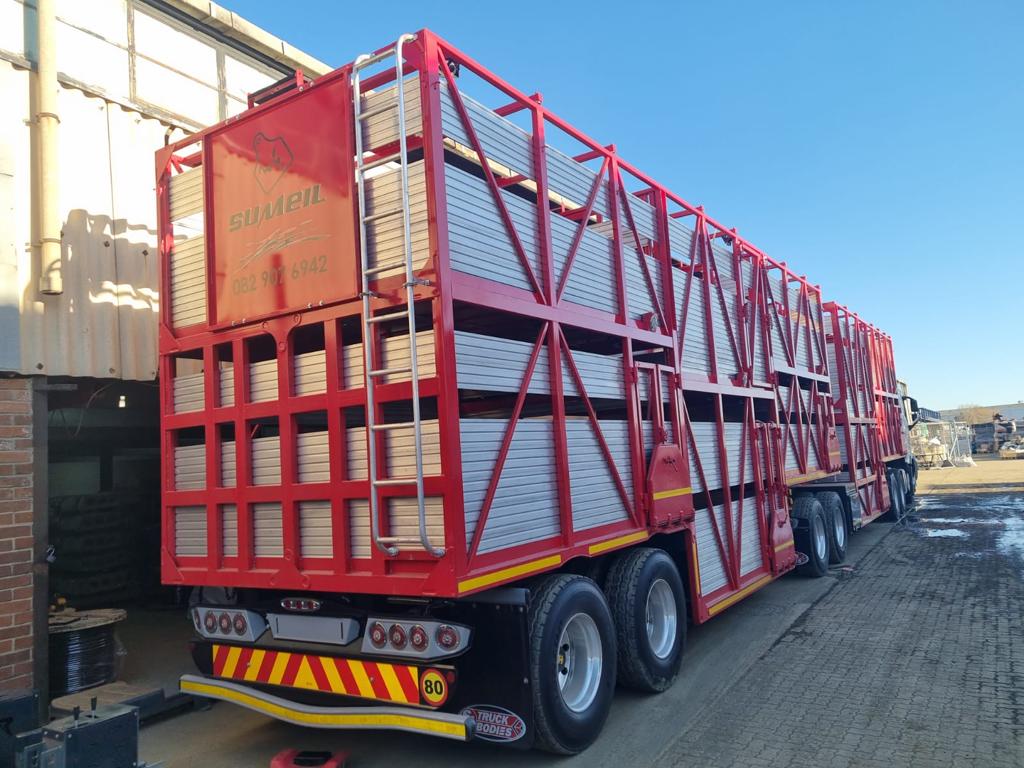
Sumeil’s broader fleet—livestock, tipper and tautliner trailers—lets us coordinate mixed operations during harvest and seasonal moves without compromising welfare or reliability.
How Sumeil Puts It All Together
- Welfare-first planning: Fit animals, right vehicle, right density, right time of day.
- Purpose-built equipment: Non-slip floors, safe partitions, effective ventilation and practical watering options on planned rest routes.
- Professional people: Trained stock handlers and defensive-driving specialists who understand behaviour, biosecurity and calm loading.
- Clear communication: One itinerary, live updates, and prepared receivers to cut waiting times.
- Continuous improvement: Trip reviews and KPIs to refine operations every month.
FAQs
How far can cattle travel in one go?
It depends on temperature, class and road profile. The guiding rule is welfare: schedule rest, water and checks on longer hauls, and avoid peak heat.
Do horns mean I need a different trailer?
Not a different trailer, but a different partition and space plan. Horned animals need more head and side clearance and mustn’t be mixed with smaller classes.
What causes most injuries in transit?
Slips on poor flooring, rushing at loading, and abrupt driving. Non-slip floors, calm handling and smooth driving fix most of it.
What documents should be ready on loading?
Animal ID/brands, movement permits, destination details, veterinary instructions where applicable, and transporter details tied to vehicle IDs.
Key Takeaways
- Welfare is the foundation of reliable, profitable livestock transport.
- Preparation, calm handling, correct density and ventilation prevent most problems.
- The right vehicle and trained people protect animals and reputations.
- Measurable KPIs and clear SOPs drive continuous improvement.
- Sumeil combines welfare-first practice with dependable scheduling across the Free State and beyond.
Conclusion
Livestock transport is where animal welfare meets logistics discipline. When producers, transporters and receivers work to a common plan—fit animals, calm loading, safe vehicles, steady driving, timely unloading—outcomes improve at every step: fewer injuries, lower shrink, better carcass results and less stress for everyone involved. With purpose-built trailers, trained teams and welfare-first SOPs, Sumeil helps farmers move animals with confidence—season after season.
Keep Reading
Learn how Sumeil Transport helps prevent foot-and-mouth disease spread in South Africa through safe livestock transport, biosecurity and compliance.
Discover why aluminium livestock trailers are the top choice for efficient and safe cattle transport. Learn about their durability, lightweight design, and how they enhance transportation efficiency.
Learn about safe livestock haulage in South Africa’s summer months. Discover essential do’s and don’ts for animal welfare, vehicle preparation, feeding, and legal compliance.
