
Before the Summer Rush: Preparing Agricultural Transport for the Season Ahead
Spring marks a change of pace across South African agriculture.
Fields are being prepared for planting, livestock management changes as warmer conditions return, and agricultural businesses begin planning for the months ahead.
For transport operators, this period is equally important.
Agricultural transport does not begin when a truck arrives at the farm gate. Reliable logistics depends on planning routes, matching the right trailer to the load, keeping vehicles ready and understanding how changing seasonal conditions can affect every journey.
The quieter weeks before summer become busy are therefore an opportunity to prepare.
Agricultural transport rarely follows a simple schedule
Moving agricultural products is different from transporting predictable factory goods between two fixed locations.
Loads change.
Destinations change.
Weather changes.
Farm roads may be dry and easily accessible one week and difficult after heavy summer rain the next.
A vehicle might be moving grain today, livestock tomorrow or agricultural equipment later in the week.
That variability makes preparation particularly important.
When transport demand increases, there is less room for avoidable delays caused by poor communication, unsuitable equipment or last-minute planning.
Match the trailer to the load
One of the most basic transport decisions is also one of the most important: using equipment suited to the cargo being moved.
Different agricultural loads have very different requirements.
Side tippers
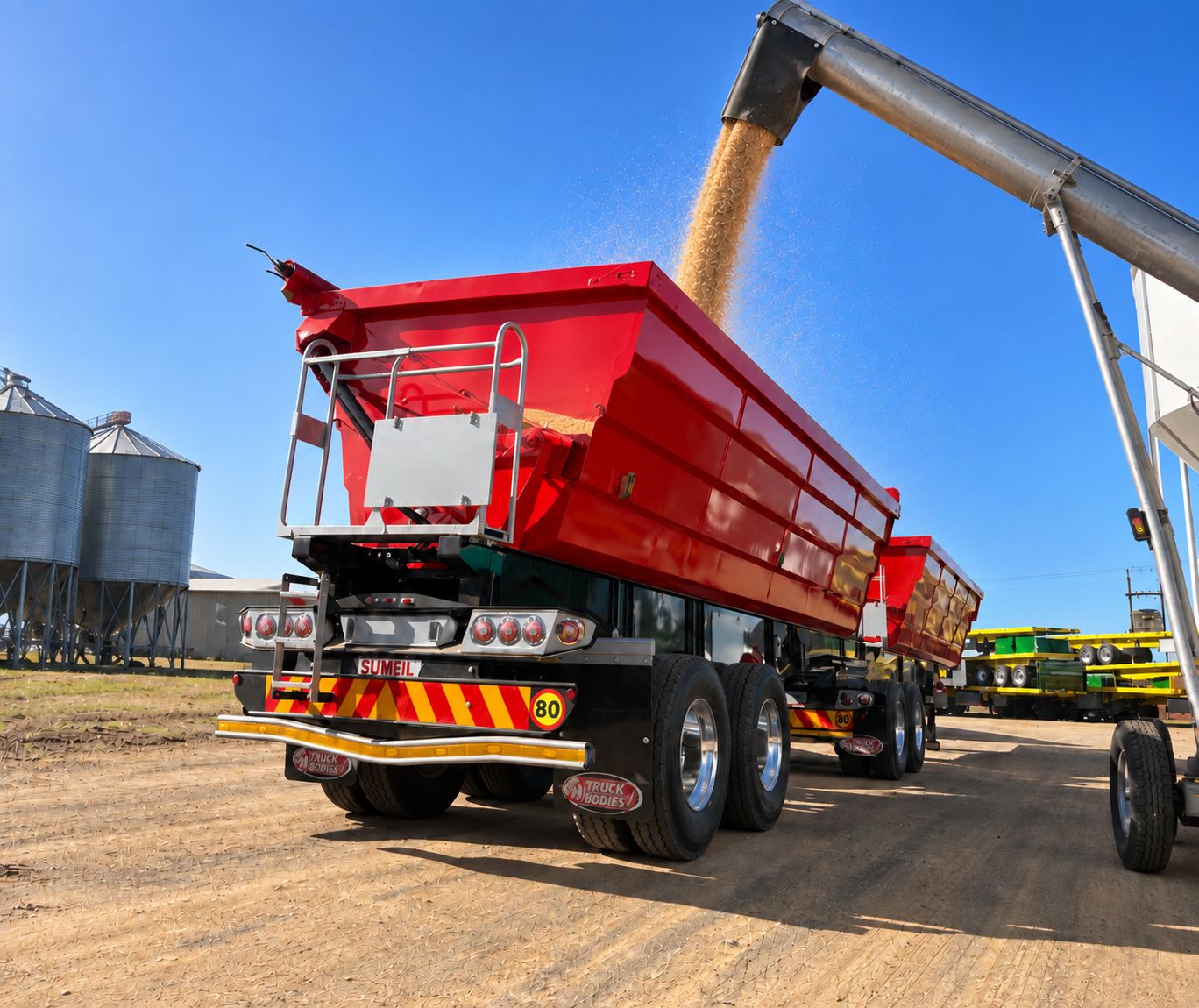
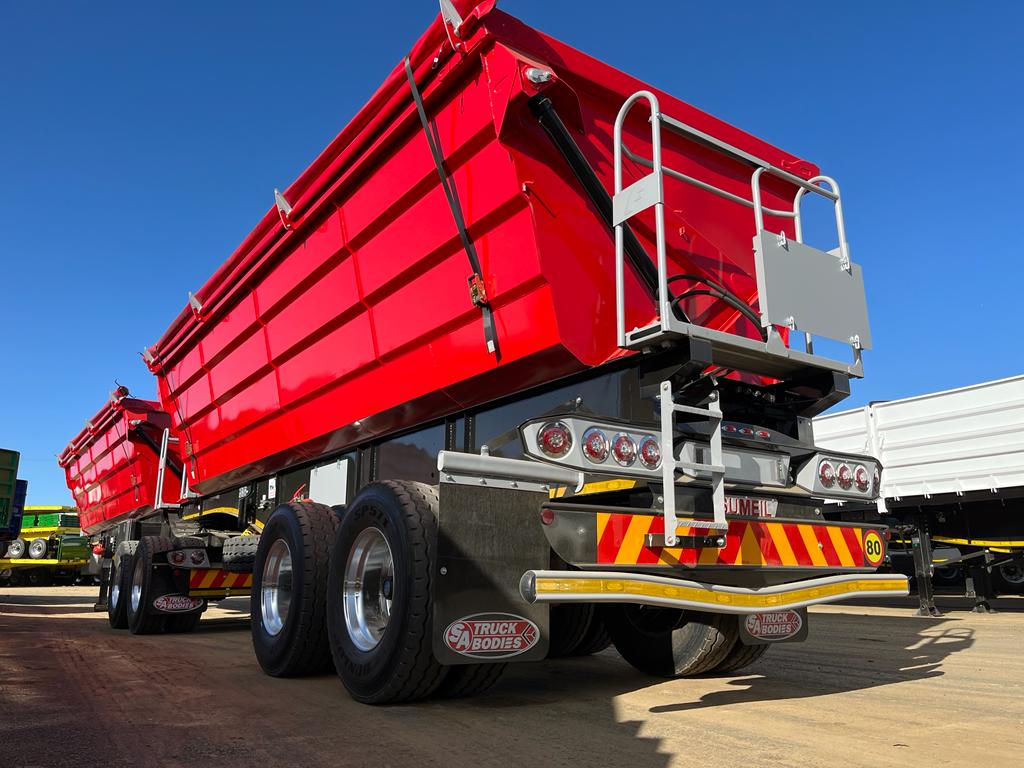
Side tipper trailers are well suited to bulk agricultural commodities where efficient loading and unloading are important.
They allow bulk material to be discharged quickly without requiring the same unloading setup as some conventional trailer configurations.
For grain and other bulk commodities, this can help keep trucks moving and reduce unnecessary time spent at loading and delivery points.
Aluminium cattle trailers
Livestock transport requires a completely different approach.
Cattle are live cargo. The trailer must provide appropriate ventilation, secure loading areas and a structure designed specifically for transporting animals safely.
Loading density, handling and journey planning all become part of the transport process.
The objective is not simply to move livestock from one point to another. It is to do so with as little unnecessary stress as possible.
Tautliners
Not every agricultural load is loose grain or livestock.
Feed, packaged agricultural products, equipment, pallets and other general freight may be better suited to a tautliner.
The enclosed curtain-sided design provides protection while still allowing convenient access from the sides during loading and unloading.
Choosing the correct trailer from the beginning makes the entire journey simpler.
Good transport planning starts before collection
Many transport delays begin before the truck has even arrived.
Incorrect loading information, unclear directions, unsuitable access roads or unexpected waiting times can all create unnecessary problems.
Before dispatch, the transporter should have a clear understanding of the load and destination.
Important information includes the type of cargo, approximate weight, loading method, unloading requirements, access conditions and any time restrictions at the collection or delivery point.
Agricultural locations can also be considerably more difficult to access than conventional warehouses.
A farm entrance that works perfectly for a bakkie may present a very different challenge to a truck and trailer.
Knowing these conditions beforehand allows the driver and transport team to plan appropriately.
Summer weather changes road conditions quickly
The return of summer rainfall is good news for agriculture, but it also introduces additional transport challenges.
Heavy rainfall can affect gravel roads, farm access routes and loading areas. Standing water and soft ground can turn an otherwise straightforward collection into a difficult operation.
Transport planning during the summer months therefore needs some flexibility.
Weather conditions may require routes to change or collections to be adjusted.
Drivers also need to take changing road conditions into account rather than treating every journey as identical simply because the destination has been visited before.
Yesterday’s road conditions are not necessarily today’s road conditions.
Vehicle reliability becomes even more important during busy periods
When agricultural activity increases, transport schedules often become tighter.
This is when preventative maintenance begins to pay for itself.
A truck that is unavailable because of a problem affects more than the transport company. It can delay loading teams, receiving facilities, farmers and other businesses further along the supply chain.
Regular inspections of tyres, braking systems, lights, suspension, hydraulic systems and trailers help identify problems before they become roadside breakdowns.
The same applies to smaller components.
A damaged curtain, faulty trailer light or worn tyre might seem minor when the vehicle is standing in the yard. On the road, it can become a much bigger problem.
Reliable agricultural transport depends on both the truck and trailer being ready for the work expected of them.
Timing matters at both ends of the journey
A truck arriving too late creates obvious problems.
A truck arriving significantly too early can create problems too.
Loading facilities may have limited space. Farms may have machinery or staff scheduled around collection times. Delivery points may operate within specific receiving hours.
Good communication between transporter, farmer and destination helps everyone plan.
This becomes even more important when multiple vehicles are moving between the same locations.
Small delays can quickly accumulate when trucks begin queueing behind one another.
Efficient transport is therefore not only about driving time.
Loading, waiting, unloading and turnaround time all form part of the journey.
Livestock requires additional planning
Livestock transport deserves particular attention because conditions during the journey directly affect the animals being transported.
Warmer weather can increase the importance of ventilation, journey timing and careful handling.
Loading and unloading should be calm and controlled, while unnecessary delays should be avoided wherever possible.
Drivers transporting cattle also need to understand that the load can move and behave differently from static freight.
Good livestock transport therefore depends on appropriate equipment and experienced handling rather than simply having enough carrying capacity.
Communication becomes part of logistics
Agricultural transport involves several people who may all be working to different schedules.
The farmer needs to know when the truck is arriving.
The driver needs accurate collection information.
The receiving point needs to know when the load is expected.
If conditions change, those changes need to be communicated quickly.
A simple update about a delay can prevent hours of unnecessary waiting elsewhere.
This is why communication is not separate from transport logistics. It is part of the service.
The physical journey may happen on the road, but much of the efficiency comes from what happens before and during that journey.
Preparing before demand increases
Once the agricultural season becomes busy, transport capacity becomes more valuable.
Planning ahead gives farmers and agricultural businesses a better chance of securing the appropriate transport when it is required.
It also gives transport operators time to organise vehicles, trailers and routes properly instead of reacting to every request at the last minute.
Not every agricultural movement can be booked weeks ahead. Farming simply does not work that way.
Weather changes.
Harvest timing changes.
Livestock movements change.
But where transport requirements can be anticipated, early communication helps.
Reliable logistics supports the entire agricultural operation
Transport is easy to overlook until something goes wrong.
Yet almost every part of agriculture depends on moving something.
Seed and fertiliser need to reach farms.
Livestock need to be transported safely.
Grain needs to move from farms to storage or processing facilities.
Feed, equipment and other supplies need to reach their destinations.
The truck on the road is therefore only one part of a much larger agricultural system.
At Sumeil, agricultural transport means understanding that the load, the equipment, the road conditions and the people waiting at either end all matter.
As the summer season approaches, preparation helps ensure that when agriculture starts moving, the transport behind it is ready to move as well.
Keep Reading
Agricultural transport logistics forms the backbone of South Africa’s farming economy. Whether moving maize from inland Free State farms to coastal silos, transporting cattle across...
Discover how custom agricultural transport solutions improve efficiency, reduce costs, and ensure safe delivery of livestock, grains, and perishables. Learn about specialized trailers, tipper trucks, and cold chain logistics for South African farmers.
Discover how Sumeil delivers tailored transport solutions for South African farmers — from side tipper trailers to livestock welfare — with year-round reliability and nationwide reach.
